
EduCity Campus · Winter Season · Special Class
Junior Winter IELTS Intensive
Academic IELTS Study — from secondary school, sitting the exam in the classroom you learned in
A separate winter-season programme, fully distinct from the holiday camp. It opens on 1/4 and ends by 2/12 — join on one of three dates, for two to six weeks. The camp day stays as it is; only the group lessons become the four IELTS modules, and a mock test every Friday shows the band score moving in numbers.

Official IELTS test venue
MEC is an official IELTS test venue. After six weeks you sit the real exam in the same classroom, on the same route you know.
At a glance
Only the facts you need to decide
An academic track run inside the day camp (commuting with a parent). Application, shuttle and accommodation are the same as the day camp; only what happens in the classroom differs.
Why this class
Three reasons the score moves within six weeks
You sit the exam where you studied
MEC is an official IELTS test venue. On exam day there is no unfamiliar hall — the same classroom and route you used for six weeks. Less exam anxiety means your real level shows.
A camp day, with IELTS inside it
Four group periods are the four IELTS modules, 1:1 targets the weakest skill (usually Writing and Speaking), reading uses academic texts, and the activity slot becomes vocabulary build-up. Exam preparation laid over a proven camp rhythm.
Every Friday, in numbers
A four-module mock test every Friday, with the band score recorded. The result sets next week's 1:1 target, and the weekly growth curve is shared with parents.

The day
Measured every day, proven every week
45-minute lessons with 5-minute breaks and a 45-minute lunch. Monday to Thursday the day is built from these four parts; Friday morning is a mock exam in the real test order.
Group — one module a day
4 periods a day: Listening, Reading, Writing and Speaking, one period each, Monday to Thursday. Question types → strategy → practice → feedback, in groups of 3–10. One piece of writing is submitted every day and returned the next day with a band breakdown.
1:1 — the weakest skill only
1–3 periods a day depending on type. The lowest of the four skills in the entry diagnostic and Friday's mock becomes that week's 1:1 topic — usually Writing or Speaking, where the band moves fastest.
Academic reading
1 period a day. Non-fiction and academic passages read to the end and checked with comprehension quizzes — building and recording the stamina IELTS Reading needs, every day.
Vocabulary build-up
1 period a day, in the camp's activity slot. IELTS academic vocabulary learned by topic, 100 words a week, checked with a Friday vocabulary test. Time spent only on the vocabulary every module stands on.
Choosing a type — only the 1:1 count differs
Same names and same period counts as the day camp's peak-season types. Only the activity period becomes vocabulary build-up, so a sibling in the day camp keeps the same drop-off and pick-up times.
| Periods / day | Basic | Plus | Intensive |
|---|---|---|---|
| Group IELTS modules | ×4 | ×4 | ×4 |
| 1:1 | ×1 | ×2 | ×3 |
| Academic reading | ×1 | ×1 | ×1 |
| Vocabulary build-up | ×1 | ×1 | ×1 |
| Total | 7 periods | 8 periods | 9 periods |
The EduCity campus does not run Intensive II. The actual timetable is assigned individually from the placement test on entry.
What happens in each module
Each module runs question types → strategy → practice → individual feedback. The 1:1 goes to whichever module was weakest that week.
Reading
Strategies by question type and time allocation (20 minutes a passage). Passages are worked against the clock and marked at once, building accuracy by question type.
Writing
Structuring Task 1 and 2 with individual marking. One piece a day (Task 1 and 2 on alternate days), returned the next day scored on task achievement, coherence, vocabulary and grammar.
Speaking
The flow of Parts 1–3 and mock interviews. A 1–2 minute Part 2 recording every day with teacher notes, and a scored examiner-style interview once a week.
Listening
Note-taking and adapting to varied accents, repeated section by section in the one-play format of the real test.
2-week cycles
Two weeks make one full cycle — start at the beginning, whenever you join
The six weeks are split into three two-week cycles. Each intake date (4 Jan, 18 Jan, 1 Feb) is the first day of a cycle, and a cycle is not a step in a difficulty ladder but a complete course covering every question type — so whichever week you join, you never land in the middle.
- 1
Cycle week 1 — diagnose · strategy
A four-skill diagnostic on day one (the entry diagnostic for newcomers) sets the class group and each skill's target. One full pass through the strategies for every question and essay type, with daily writing and Speaking recordings from day one.
- 2
Cycle week 2 — feedback · practice · proof
1:1 concentrated on the weakest skill and deeper marking. Days practised on the real exam timetable, and a full mock exam on the last Friday gives a report comparing scores with two weeks earlier.
Every Friday morning: Listening → Reading → Writing in the real test order (answer sheets, clock and breaks as in the exam), then Speaking interviews. Marked the same day → parent report on Saturday morning (band curve by skill + vocabulary score + next week's 1:1 target) → weekend homework handed out.
The same starting line, whichever intake you join
Every cycle covers every type
A cycle is a complete course, not a difficulty step. Each one goes through all Reading and Listening question types, Writing Task 1 and 2, and Speaking Parts 1–3 — joining on 18 Jan or 1 Feb means missing nothing.
Classes are grouped by level, not by date
The entry diagnostic places each student in a class by target band. Students who join on the same day may be in different classes; a newcomer at the same level as an earlier student joins the same class.
Staying on: a new set, and a class one level up
Each cycle uses a different set (A, B, C) of passages, essay topics and vocabulary (200 words), so no one sits the same questions twice. Reach the target on the cycle's last-Friday mock, and the next cycle moves you up one class.
So for a two-week student their cycle is the whole course, and a six-week student moves up a class through three cycles to the rehearsal just before the real exam on the last Friday.
Intakes — one of three dates, from two weeks
Join on one of the three dates below (unlike the day camp's intake every Monday) and choose a length from two weeks up to each intake's maximum. Everything ends by 2/12, because the whole class finishes that day with the rehearsal and the exam.
| Start (Mon) | Length available | End at maximum (Fri) |
|---|---|---|
| 1/4 | 2–6 weeks | 2/12 |
| 1/18 | 2–4 weeks | 2/12 |
| 2/1 | 2 weeks | 2/12 |
Whichever intake you join, two weeks is one complete cycle with a beginning and an end. We recommend six weeks because three cycles let a student move up a class each time and reach the rehearsal just before the real exam. The last intake (1 Feb) takes two weeks only.
Exam & results
The real IELTS, in the classroom you studied in
The exam is sat at the EduCity test centre. The academy announces the date, and the sitting is confirmed once enough candidates have registered.
Exam information
- The exam date is announced by the academy after the course opens (planned for late January to mid February).
- Sitting the exam is optional — candidates register, and the sitting is confirmed once numbers are reached. If not, we guide you to the next available date.
- Exam registration and the exam fee are explained at registration (separate from the course fee).
One-page entry diagnostic
The online four-skill test records a band per skill and accuracy by question type. That one page sets the class group, the first 1:1 and the first report.
Weekly band curve
Friday mock scores are recorded by skill and sent to parents on Saturday morning together with the vocabulary test score.
Report & certificate
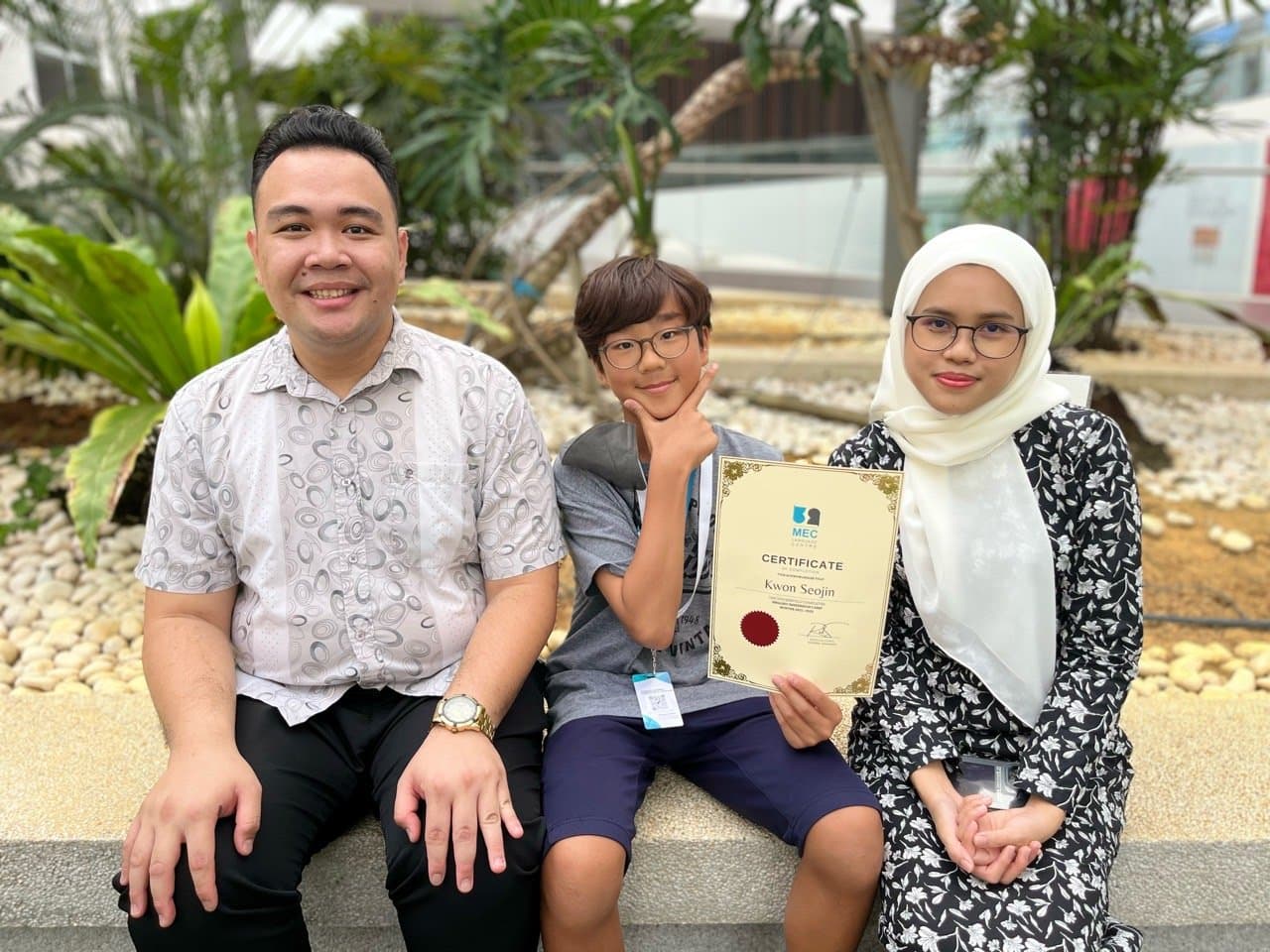
A one-page report — entry diagnostic → weekly bands → predicted band at completion — plus a certificate. For students who sit the real exam, the official score goes on the same page.
✓ Most IELTS teachers hold band 7.5 or above — classes are taught by top-band scorers.

Parents & daily life
The same day, the same campus as the day camp
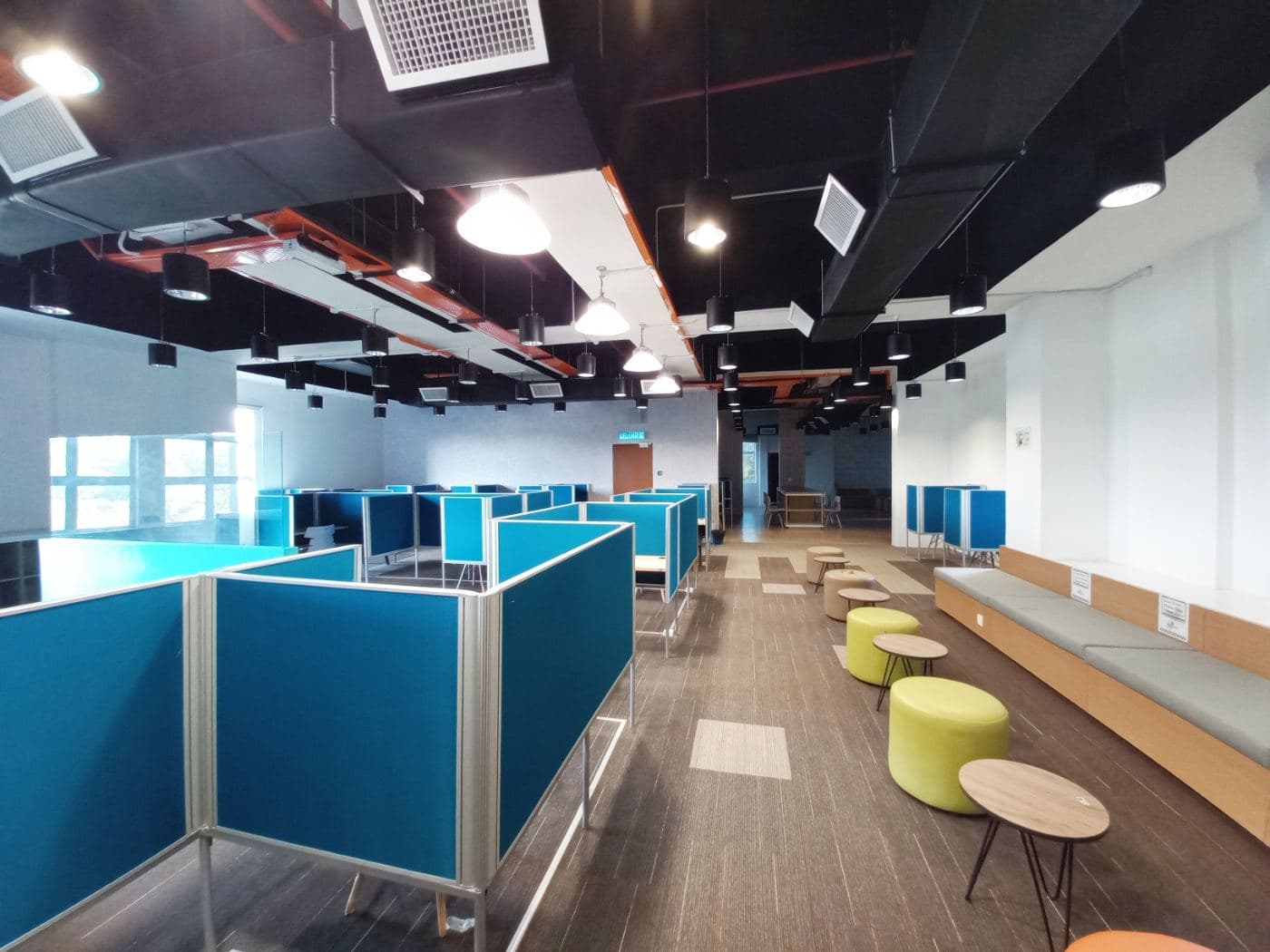
A commuting programme with a parent. Accommodation, shuttle, lunch and the parents' English course follow the day-camp arrangements as they are.
With a parent · commuting
Shuttle to and from family accommodation. If we arrange the accommodation, the shuttle is booked automatically.
Parents' English course
Parents can take General English on the same campus, scheduled within their child's class hours.
Siblings join the day camp
A younger sibling attends the day camp (ages 5–17) on the same campus. Same drop-off and pick-up times, one trip.
Fees
Check the fee in the calculator
Based on the winter junior-camp fee for the same type, plus 10% for the IELTS modules, entry diagnostic, vocabulary build-up and weekly mock exams. Enter the intake, weeks, type and accommodation and the total appears at once.
IELTS Early Bird 15
The first 15 to register pay the junior-camp fee
The first 15 students pay no IELTS premium (10%) — the same fee as the winter junior camp of the same type. It is applied automatically as an 'IELTS Early Bird 15' line in the fee calculator and on the invoice, to the first 15 invoices issued.
14 of 15 places left
- Fee = junior-camp fee for the same type × 1.1 — the first 15 early registrations pay × 1.0 (the calculator shows registration, materials and the placement test)
- The IELTS exam fee is separate from the course fee — explained when you register for the exam.
- Optional items such as accommodation, shuttle and lunch follow the same terms as the day camp.

How to apply
Four steps
- 1
Fill in the application
Choose the course 'Junior IELTS (Winter)' and one of the intakes: 1/4 · 1/18 · 2/1.
- 2
Online diagnostic before entry (four skills)
Taken online at home: Listening, Reading, Writing and Speaking. B1 or above confirms the place, and the weak points per skill are recorded from the start as the first week's 1:1 topic. Below that, we guide you to the day camp.
- 3
Confirm registration
Complete registration as the invoice explains and the place is confirmed. Places close in order of payment.
- 4
Start
Classes start on the intake Monday from 1/4. The first Friday's mock test records the starting band.
Once full, applications move to a waiting list. If the entry diagnostic is below B1, we recommend building the base at the day camp on the same campus first and joining next season.
Frequently asked questions
How is this different from the adult IELTS course?
Adult IELTS is for ages 18+ with intake all year round; this class is for ages 12–17, in the winter season only, commuting with a parent. The day structure is the junior day camp's, with IELTS in the group lessons.
What if the level is below B1?
The online diagnostic before entry (Listening, Reading, Writing and Speaking) must show B1 or above. Below that we guide you to the day camp on the same campus — many students build the base there and join the following season.
Are the day camp's Friday and activity sessions included?
The activity slot (robot coding, chess, stacking) becomes vocabulary build-up, and Friday morning is the mock exam in the real order. The optional Friday-afternoon outings can be booked just as in the day camp, and homework goes out for the weekend.
Can we come for only two weeks?
Yes — every intake can be booked from 2 weeks, and the 2/1 intake is 2 weeks only. Every cycle is a complete course through all question types and classes are grouped by level, so joining later never means joining mid-way. To push the score as far as it goes, we recommend 6 weeks for all three cycles.
Do students have to sit the real IELTS?
No, only those who wish to. The academy announces the exam date and confirms the sitting once enough candidates register. The exam fee is separate from the course fee.
What happens when places run out?
There are 32 places, closed in order of registration. Once full, applications go on a waiting list and we contact you in order if a place opens.
What about siblings?
A younger sibling can attend the day camp on the same EduCity campus. Drop-off and pick-up times match, so the family travels once, and parents can take an English course on the same campus.
How do I get IELTS Early Bird 15?
No separate application is needed. It is applied automatically to the first 15 students in the order their invoices are issued, removing the 10% IELTS premium so the fee equals the junior-camp fee for the same type. Places left are shown live on this page and in the fee calculator.
What if we want to stay longer than six weeks, or beyond the course period?
Just choose the dates you want on the application. Weeks outside the IELTS Intensive period (4 Jan – 12 Feb) continue automatically as regular Junior English at the same level (holiday camp until 26 Feb, term-time after), and both the application and the fee calculator show this. Each part is charged at its own course fee, and week-based discounts are calculated on the full period.
Winter 2027 · first 32 places
Come home from the winter break with an IELTS score
Choose an intake — 4 Jan, 18 Jan or 1 Feb — and send the application. B1 or above on the online four-skill diagnostic confirms the place.